BALLISTIC SHIELDS
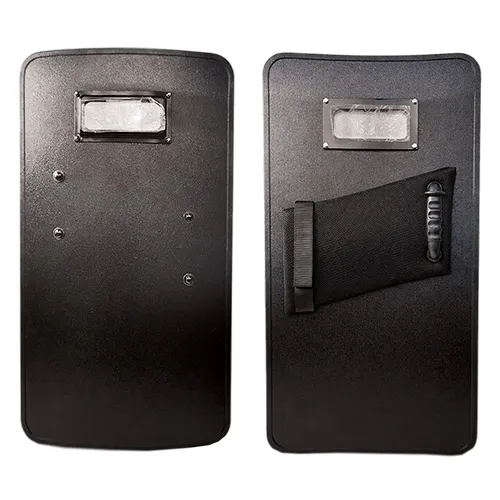
Ballistic shields are personal protective equipment used by security and police forces in the face of direct threats. They feature a small transparent window that allows visibility while maintaining a level of protection. They are usually made of strong composite materials such as ballistic fibers or ceramics to resist bullets and shrapnel. They are equipped with handles and back straps to facilitate carrying and maneuvering during field operations.
|
|
||
|
BALLISTIC SHIELDS |
||
|
|
||
|
- lightweight Ballistic Shield provides reliable protection for individual soldiers and troops. The shield's protection level is determined by the end user's requirements. |
||
|
- Ballistic Shields are tested and certified according to the NIJ 0108.01 Standard. |
||
|
|
||
|
DESCRIPTION |
||
|
Ballistic shields, also known as tactical or bulletproof shields, are portable protective devices used primarily by law enforcement and tactical teams to provide mobile cover during high-risk operations. They are specifically designed to stop or deflect incoming bullets and other dangerous projectiles. |
||
|
Common Features |
||
|
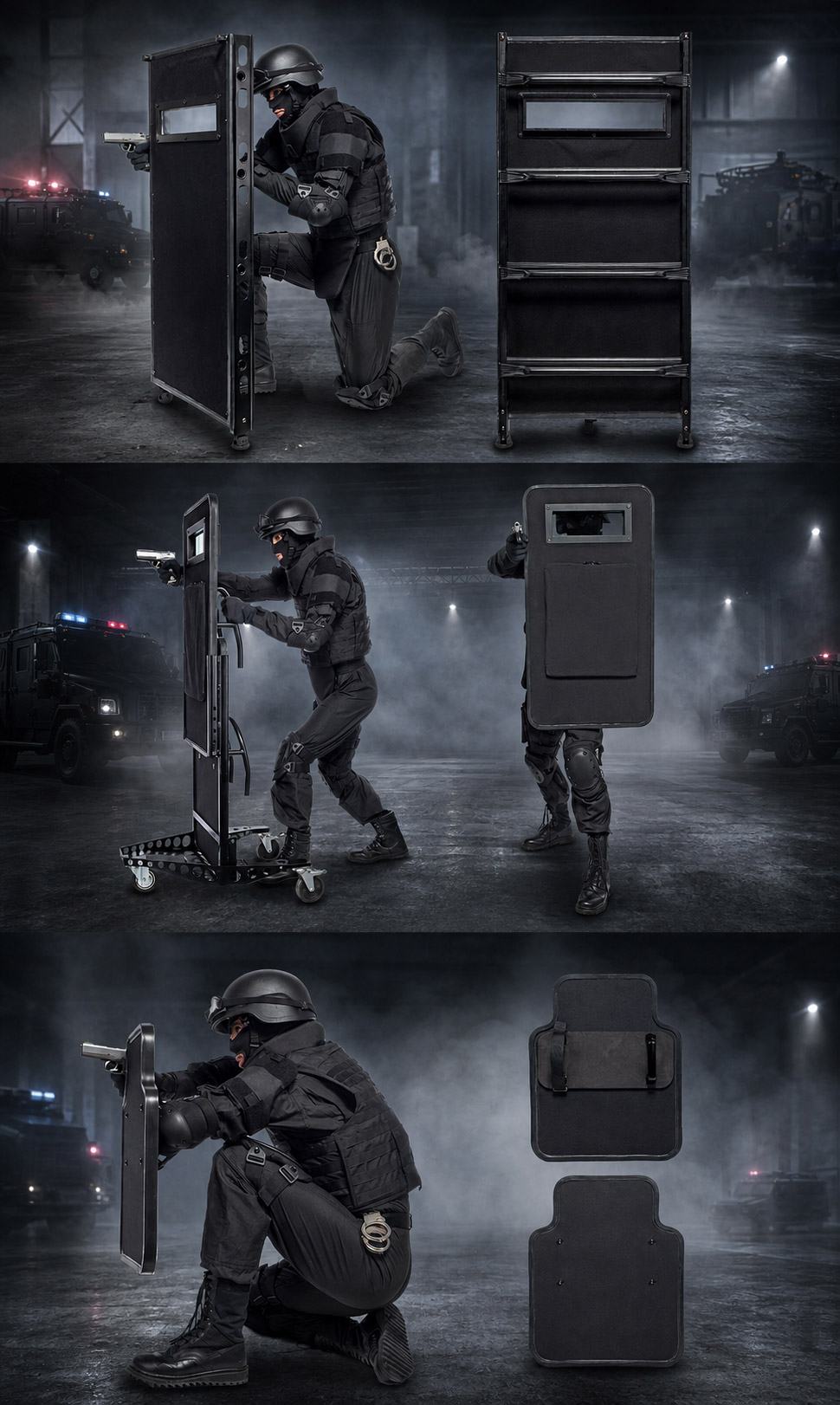
Most tactical ballistic shields incorporate several key components for field use: |
||
|
Viewport: |
A clear, ballistic-rated window that allows the operator to maintain situational awareness while remaining protected. Some advanced designs use a "seamless" molded viewport to eliminate structural weak points. |
|
|
Handle Systems: |
Ergonomic handle designs, often including weapon mount platforms, to allow for steady movement and the ability to return fire. |
|
|
Integrated Lighting: |
High-output LED systems (often 1200+ lumens) with strobe modes are frequently attached to help disorient threats and illuminate low-light environments. |
|
|
Advanced Materials: |
Modern shields are typically constructed from lightweight composites like Ultra-High-Molecular-Weight Polyethylene (UHMWPE), ceramic, or hybrid materials to maximize protection while minimizing weight for the user. |
|
|
MAIN FEATURES |
||
|
- Ballistic protection with HPPE |
||
|
- Ballistic glass window with maximum protection level IV |
||
|
- Left and right carrying handle |
||
|
- Adjustable carrying belt |
||
|
- Carry bag |
||
|
- Customized size and color |
||
|
- Ballistic protection panel of the legs (option) |
||
|
- LED luminaire (option) |
||
|
- Trolley (option) |
||
|
Protection Levels and Ratings |
||
|
Shields are rated by the National Institute of Justice (NIJ) based on the caliber and velocity of threats they can withstand: |
||
|
Level IIIA: |
Protects against most handgun rounds, including 9mm, .357 SIG, and .44 Magnum. These are often preferred when speed and mobility are critical. |
|
|
Level III: |
Designed to stop rifle rounds, such as 7.62x51mm NATO ball ammunition, 5.56mm (M193), and .308 Winchester. |
|
|
Level IV: |
Provides the highest level of protection, engineered to stop armor-piercing rifle rounds like the .30-06 M2 AP. |
|
|
PROTECTION INCLUDING BALLISTIC GLASS WINDOW |
||
|
level III |
||
|
7,62x54R mm (bullet weight 9,6±0,2 g; V0=820÷840 m/s) |
||
|
level III+ |
||
|
7,62x39 mm armor-piercing (bullet weight 7,9±0,2 g; V0=710÷740 m/s) |
||
|
level IV |
||
|
7,62x54 mm incendiary armor-piercing type B-32 (bullet weight 10,4±0,2 g; V0=800÷835 m/s) |
||
|
DIMENSIONS |
||
|
Standard dimensions of the Ballistic Shield for protection level III and IV: |
1000 x 520 x 81 mm |
|
|
Glass window standard dimensions: |
200 x 100 mm |
|
|
Option for Customized size |
||
|
Weight: |
Total weight of the standard Ballistic Shield for protection level III: < 28 kg Total weight of the standard Ballistic Shield for protection level IV < 32 kg |
|
|
|
||
 - LONG BARREL_1782206595.webp)