DHG DEFENSIVE HAND GRENADE
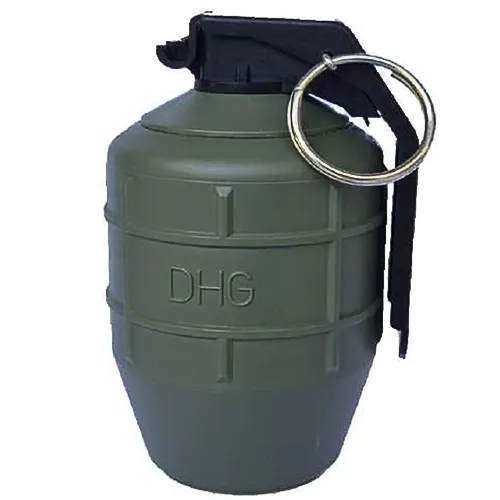
The DHG is a defensive hand grenade designed for use in open-field and fortified combat scenarios. Featuring a rugged, grid-patterned body with a safety lever and pull ring, it is packed with high explosive to deliver a powerful blast accompanied by extensive fragmentation. Intended for deployment from covered positions, the DHG provides maximum lethality against advancing infantry and light vehicles, ensuring effective area denial and battlefield superiority.
|
|
||
|
DHG DEFENSIVE HAND GRENADE |
||
|
|
||
|
DESCRIPTION |
||
|
The DHG Is a defensive hand grenade designed to defeat enemy manpower with fragmentations. This is achieved through ready-made striking elements with a spherical shape and mass, providing a large radius of impact. This is the reason why the grenade should be used by throwing it from behind cover, and it is effective on open fields. The hand grenade has two layers of safety - a safety pin, which holds the lever and makes it safe during storage and transportation, and the striker lever itself, which holds the striker until the grenade is thrown. The time delay from the moment of releasing the striker lever till detonation is provided by a pyro delay mechanism with a time of 4.0±0.5 s. |
||
|
Key Technical Specifications |
||
|
Feature: |
DHG-1 Details |
|
|
Manufacturer: |
Arsenal JSCo., Bulgaria |
|
|
Type: |
Defensive High-Explosive (HE) Fragmentation |
|
|
Design: |
Segmented cast iron or steel body for enhanced fragmentation |
|
|
Weight: |
Approximately 600 g (significantly heavier than the OHG) |
|
|
Explosive Charge: |
60 g of TNT or RDX |
|
|
Lethal Radius: |
Approximately 15-20 meters |
|
|
Safety Radius: |
200 meters (fragments can travel this far) |
|
|
Delay Time: |
3.2 to 4.2 seconds |
|
|
TECHNICAL INFORMATION |
||
|
Grenade type |
Defensive |
|
|
Type |
Hand Grenade |
|
|
Diameter |
60 mm |
|
|
Height |
110 mm |
|
|
Weight |
0.505 kg |
|
|
Remote arming time of fuze |
4 sec ± 0.5 sec |
|
|
Weight of TNT |
80 g |
|
|
Explosive |
TNT |
|
|
Diameter of fragmentation |
2.9 mm |
|
|
Number of ready-made striking elements |
Approx. 3000 pcs |
|
|
Impact radius with probability 50% |
12 m |
|
|
Type of fuze |
ED-4S |
|
|
Operating temperature |
From -40°C to +50°C |
|
|
Safety radius |
54 m |
|
|
Safe drop height |
3 m |
|
|
DHG vs. OHG: The Main Differences |
||
|
The primary difference lies in their tactical use and body design: |
||
|
Fragmentation (Defensive): The DHG has a thick, segmented body designed to shatter into large, heavy fragments upon detonation. Because its lethal radius is larger than the distance an average soldier can throw it, it must be thrown from behind cover (like a trench or a wall). |
||
|
Concussion (Offensive): The OHG has a smooth, thinner body. It relies on blast pressure and smaller fragments to clear an area, allowing advancing soldiers to throw it while in the open without being hit by their own grenade's shrapnel |
||