Drone RF detection and jamming system
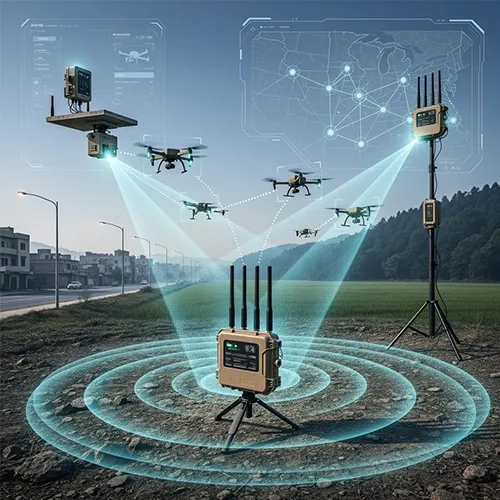
Drone RF Detection and Jamming Systems are advanced solutions for countering drones by combining detection and jamming technologies. They work by detecting the drone's radio frequency signals to determine its location and direction, and then jamming them to disrupt communication between the drone and the operator or between the drone and the navigation system.
|
|
|
|
Drone RF detection and jamming system |
|
|
|
|
|
Flexible architecture, easy deployment in any area, network connectivity |
|
|
Common Applications Vulnerability Protection: Securing VIPs, convoys, and groups of individuals from remote-controlled improvised explosive devices (RCIEDs). Facility Security: Establishing no-fly zones for commercial drones around sensitive areas like airports, military bases, and critical infrastructure. Law Enforcement: Assisting in tactical operations where air safety and privacy are required. |
|
|
|
|
|
DESCRIPTION |
|
|
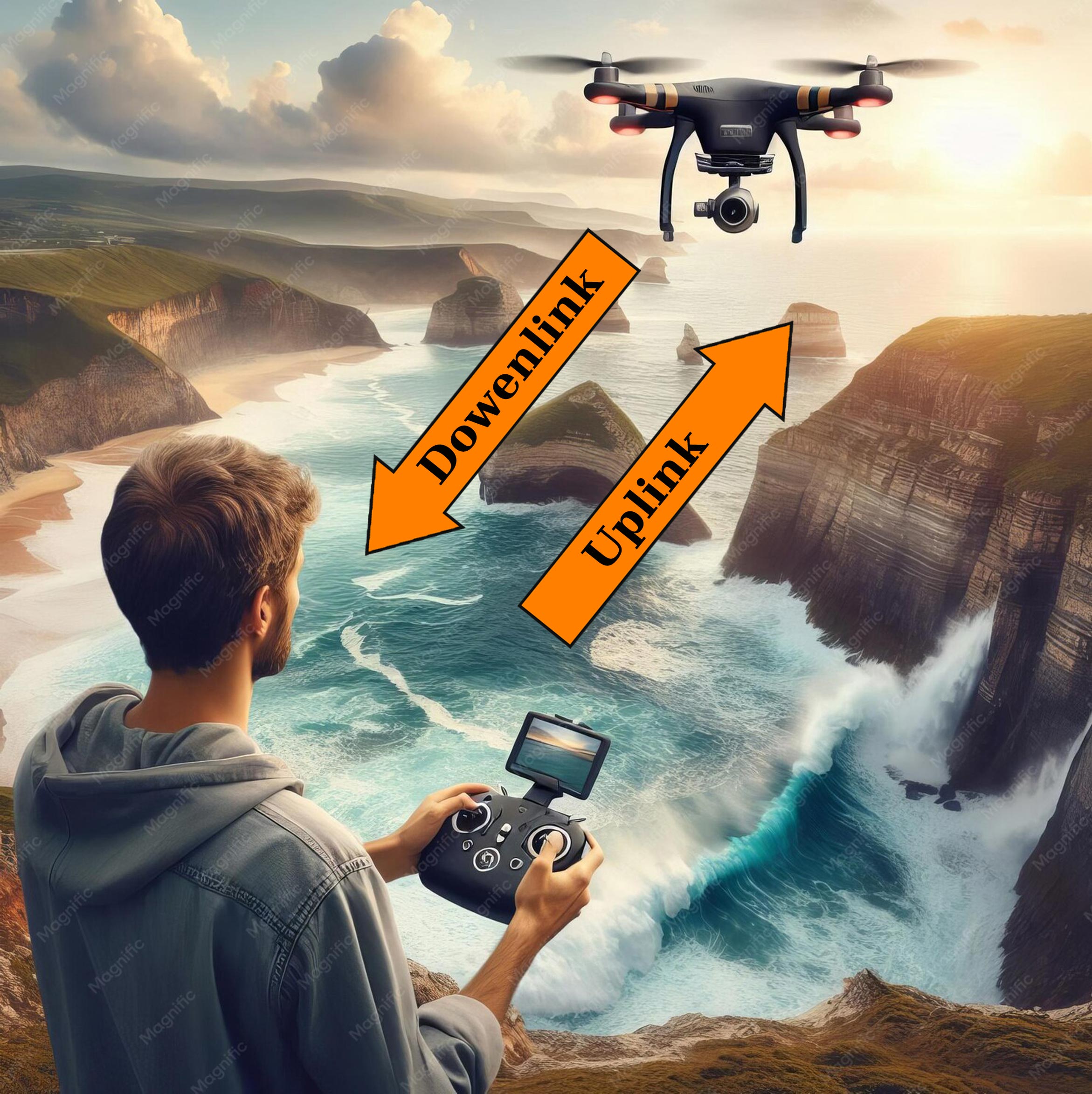
DETECTION IS BASED ON THE RADIO FREQUENCY DETECTION OF THE UPLINK AND DOWNLINK FREQUENCIES OF THE COMMUNICATION CHANNELS BETWEEN THE DRONE AND DRONE REMOTE CONTROL STATION |
|
|
Key Features and Capabilities |
|
|
These systems are designed to provide a non-kinetic defense by passively detecting and actively neutralizing drone communication. |
|
|
Detection: |
It uses passive RF sensors to monitor uplink (control) and downlink (telemetry/video) signals, often capable of identifying drone models and tracking pilot |
|
Jamming: |
Once a threat is identified, the system transmits high-power interference across key frequency bands (such as 2.4GHz, 5.8GHz, GPS, and GLONASS) to block communication links, forcing the drone to land or return to its origin. |
|
Portability: |
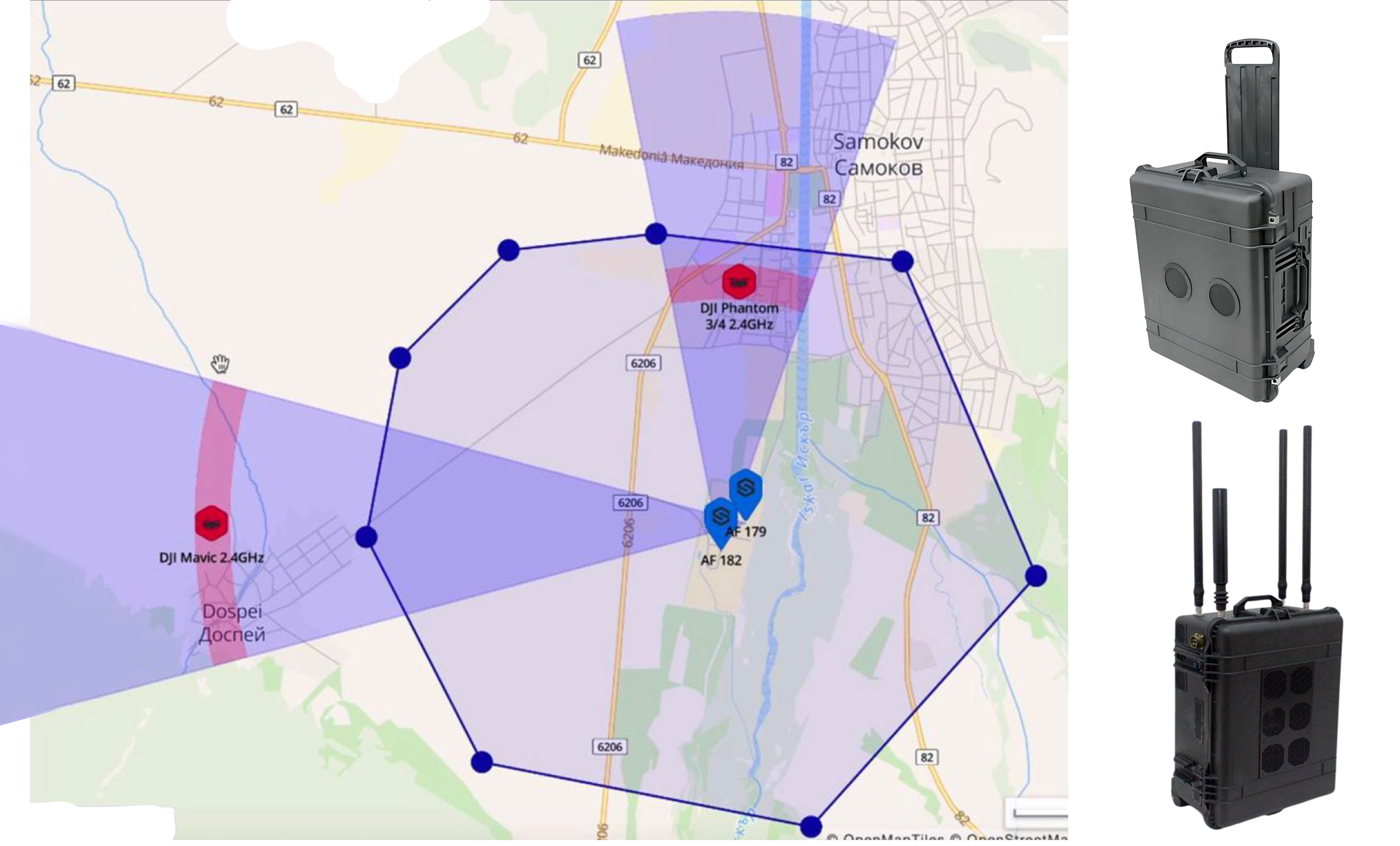
The system is integrated into a durable transport case-typically a Pelican 1630 or similar model-equipped with wheels and a retractable handle for easy transport. |
|
Modular Design: |
Many models feature modular architecture, allowing for customized frequency points and easy maintenance. |
|
COMPOSITION OF THE SYSTEM |
|
|
Drone detection sensor RF detector. Jamming system. Operator workstation (PC or laptop). Command and Control Software. Option for integration of other types of sensors and systems. |
|
|
INSTALLATION |
|
|
Option for stationary and mobile installations (including operation during vehicle movement) Minimum system installation time in stationary and mobile variants. Fully passive sensor. |
|
|
DRONE DETECTION RANGE |
|
|
Up to 8 km independently from drone size. |
|
|
Possibility for detection of the drone operator's position. Possibility of drone tracking after detection. |
|
|
AVAILABLE INFORMATION ABOUT THE DETECTED DRONES |
|
|
Type (model) of the drone. Drone ID. Time for the first and last detection. Distance in km. Geographic coordinates. Altitude. Detected frequency. Communication protocol. |
|
|
RF DETECTION METHOD ADVANTAGES |
|
|
Long detection range in 360° simultaneously for an unlimited number of drones. Fully passive (no RF transmissions) device. Detection and targeting of the drone/drones with different speed and altitude of flying. Possibility for detection of the pilot/s allocation and drone/drone home position. Guaranteed detection in any weather conditions during the day and night. Extremely low consumption. Low size and weight (total < 45 kg). Technically an effective solution. RF Sensor is working without pant-tilt devices and rotating parts. Detection and targeting of the drone/drones is without operator intervention. Detection and targeting of the drone/drones with different speeds and altitudes of flying. |
|
|
RF FREQUENCY DETECTION ZONE |
|
|
360°. |
|
|
FREQUENCY BANDS FOR DETECTION AND JAMMING |
|
|
433 MHz. 915 MHz. all types of navigation satellites' bandwidths. 2400-2500 MHz. 5800 MHz. Option for other frequency bands. |
|
|
JAMMING SYSTEM OUTPUT RF POWER |
|
|
Depending on the end user's requirements. |
|
|
TYPE OF JAMMING SYSTEM ANTENNAS |
|
|
Directional and/or omnidirectional antennas. |
|
|
JAMMING DISTANCE |
|
|
Up to 6 km for all types of drones. |
|
|
SYSTEMS PARTS INSTALLATION |
|
|
Two Peli-type briefcases. Total weight of the whole system < 45 kg. According to the military standards. |
|
|
SYSTEM DESIGN |
|
|
RF signals which Anti Drone System detected. |
|
|
|
|
|
UPLINK SIGNALS |
|
|
Signals for the drone remote control can be Wi-Fi, Bluetooth, or your own signals - most often FHSS (Frequency-hopping spread spectrum). |
|
|
DOWNLINK SIGNALS |
|
|
Telemetry signals from the drone. Video data (analogue PAL/NTSC, Wi-Fi, or own protocols. GNSS data for the drone and pilot (for example, GPS, Galileo, GLONASS, Beidou, etc). |
|
|
|
|
 MACHINE GUN-001_1782199734.webp)